

Published on

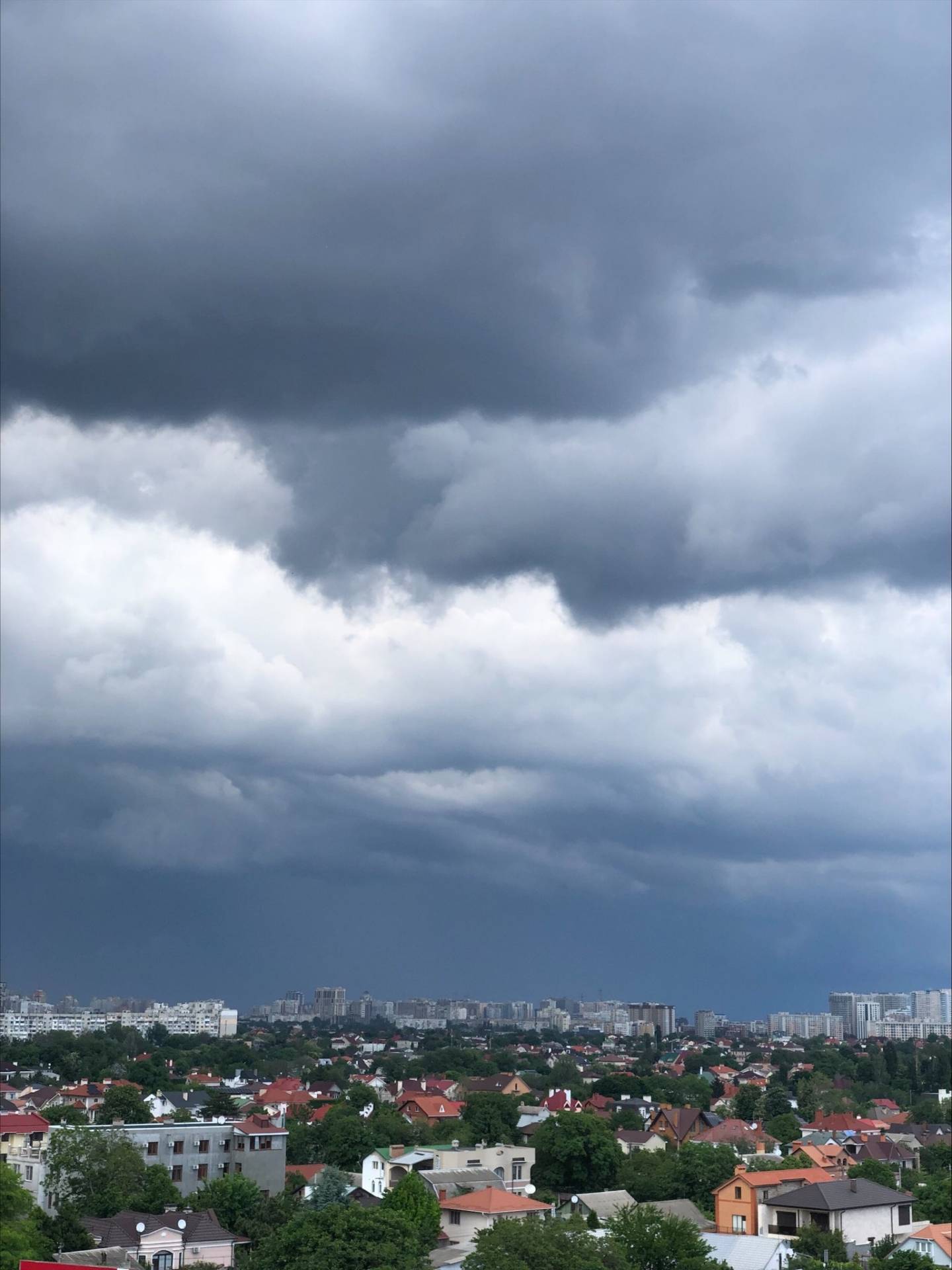
Most tornadoes take on the appearance of a narrow funnel, a few hundred meters (yards) across, with a small cloud of debris near the ground. Tornadoes may be obscured completely by rain or dust. These tornadoes are especially dangerous, as even experienced meteorologists might not see them.[25]
Small, relatively weak landspouts may be visible only as a small swirl of dust on the ground. Although the condensation funnel may not extend all the way to the ground, if associated surface winds are greater than 64 km/h (40 mph), the circulation is considered a tornado.[18] A tornado with a nearly cylindrical profile and relatively low height is sometimes referred to as a “stovepipe” tornado. Large tornadoes which appear at least as wide as their cloud-to-ground height can look like large wedges stuck into the ground, and so are known as “wedge tornadoes” or “wedges”.[26] The “stovepipe” classification is also used for this type of tornado if it otherwise fits that profile. A wedge can be so wide that it appears to be a block of dark clouds, wider than the distance from the cloud base to the ground. Even experienced storm observers may not be able to tell the difference between a low-hanging cloud and a wedge tornado from a distance. Many, but not all major tornadoes are wedges.[26]
A rope tornado in its dissipating stage, found near Tecumseh, Oklahoma.
Tornadoes in the dissipating stage can resemble narrow tubes or ropes, and often curl or twist into complex shapes. These tornadoes are said to be “roping out”, or becoming a “rope tornado”. When they rope out, the length of their funnel increases, which forces the winds within the funnel to weaken due to conservation of angular momentum.[27] Multiple-vortex tornadoes can appear as a family of swirls circling a common center, or they may be completely obscured by condensation, dust, and debris, appearing to be a single funnel.[28]
In the United States, tornadoes are around 500 feet (150 m) across on average.[25] However, there is a wide range of tornado sizes. Weak tornadoes, or strong yet dissipating tornadoes, can be exceedingly narrow, sometimes only a few feet or couple meters across. One tornado was reported to have a damage path only 7 feet (2.1 m) long.[25]On the other end of the spectrum, wedge tornadoes can have a damage path a mile (1.6 km) wide or more. A tornado that affected Hallam, Nebraska on May 22, 2004, was up to 2.5 miles (4.0 km) wide at the ground, and a tornado in El Reno, Oklahoma on May 31, 2013, was approximately 2.6 miles (4.2 km) wide, the widest on record.[4][29]




Community Comments
There are no comments on this post
Want to leave a comment? Join our community → OR Login →